Showing posts sorted by relevance for query mind. Sort by date Show all posts

Tuesday, July 27, 2004

The Global Mind

"This article presents some thoughts about the future of intelligence on Earth. In particular, I discuss the similarities between the Internet and the brain, and how I believe the emerging Semantic Web will make this similarity even greater."

Keywords from the article:
- Distributed Intelligence
- The Internet is a Brain…and the Web is its Mind
- Memes are Evolving Minds of their Own
- The Infrastructure of Distributed Intelligence
- The Evolution of Metalanguage
- How the Global Mind Thinks
- Can the Global Mind Pass the Turing Test
- Reading the Global Mind
- Minding Your Business
- Knowledge Objects: A New Medium for the Web
- Knowledge Networks

Link
Source: Minding the Planet
See also:
From Semantic Web to Global Mind - Danny Ayers
Nova Spivacks on the global mind - Future Now
Semantic Web - Wikipedia
Hive mind - Red Herring
The Rise of Digital Lifestyle Aggregation - Marc Canter
Semantic Web - Orkut

Wednesday, August 15, 2007

Civil petition against the unequal treatment of the citizens of the Republic of Bulgaria by the authorities

Keywords: Roma in Bulgaria

Image: dnevnik.bg

Ladies and gentlemen,

Recently, in the Bulgarian society there has been a tendency for the discrimination of the non-Roma population of the Republic of Bulgaria, e.g. people are being treated in a different way, most often unfavorable and discriminatory, on the basis of their race, ethnicity, background and social status in favour of the Roma population.

Chapter 1 of The Bulgarian Constitution states that:

"§ 6 (1) All human beings are born free and equal in dignity and rights.
(2) All citizens are equal in front of the law. Limitations of their rights or privileges based on race, nationality, ethnicity, sex, origin, religion, education, beliefs, party affiliation, personal and social status or property status shall not be tolerated."

Today, in the Bulgarian society there are plenty of examples for the violation of the above quoted law. As such, we quote the following:

1. The case in the residential district Zaharna Fabrika, Sofia, where as a result of battery Prof. Stanimir Kaloyanov was killed and so far the perpetrators have not faced any responsibility for their actions due to their Roma origin, having in mind that the residents of the district know who these individuals are. The Bulgarian institutions refuse to guarantee a fair trial and security for the residents of the district in the future, and in the recurrent events, e.g. assaults and harassment. The authorities do not provide transparency of the results of the investigation. In a similar manner, the state and its institutions refuse to protect the train commuters in Bulgaria when individuals of Roma origin throw stones at the trains on a daily basis. The latter individuals do not face any sanctions and the police do not try to limit or terminate their actions, having in mind that they are recurrent. It is also common that individuals of Roma origin encroach upon agricultural property and, as a result, the owners of the property are left with nothing to live on. The perpetrators are rarely caught and even less frequently – punished. The examples above show that the law has been violated and this gives us reason to claim that the citizens of Bulgaria are not equal in front of the law.

2. The Bulgarian state provides free apartments to individuals of Roma origin and does not provide such to non-Roma citizens of Bulgaria. This is a violation of The Constitution of the Republic of Bulgaria, which forbids privileges based on ethnicity.

3. The Bulgarian state provides all sorts of aid to individuals of Roma origin and does not provide such to non-Roma citizens of Bulgaria, having in mind that in both cases the individuals are extremely poor. This is a violation of The Constitution of the Republic of Bulgaria, which forbids privileges based on ethnicity.

4. Unequal treatment of the rights of Bulgarian citizens on the basis of their origin by the following Bulgarian institutions: Elektrorazpredelenie EAD (the Electric Company), the public transport companies, the Police of the Republic of Bulgaria, the Bulgarian Court System, etc. A well-known fact from our everyday life is that when Bulgarians do not pay their bills to Elektrorazpredelenie EAD within deadline, the company immediately cuts their electricity, based on their non-Roma origin, and does not cut their electricity, based on their Roma origin, regardless of the fact that the Roma community have millions of leva debt to Elektrorazpredelenie EAD dating back 15 years and they do not even try to pay that debt on the ground of being unemployed and at the same time they often refuse jobs offered to them by the employment offices. This is a violation of The Constitution of the Republic of Bulgaria, which forbids any privileges and inequalities based on ethnicity.

5. The citizens of the Republic of Bulgaria are not equal when they apply for universities, even though The Constitution of the Republic of Bulgaria explicitly forbids that. For example, article 22 paragraph 3 in the admission requirements book of the Technical University of Varna states that 5 places are reserved for the admission of students of Roma origin.

6. State institutions, organizations and media propagate ethnic hatred and aggression in Bulgaria by claiming that the Roma minority is being discriminated by the majority, having in mind that racial and ethnic discrimination and their propagation are indictable by the constitution. There is no adequate state policy towards the Roma minority and this instigates racism and hatred towards the Roma minority. The tacit toleration of the situation, which sometimes receives large publicity, creates a dangerous precedent in Bulgaria, where there has never been racism. On the contrary, our country has provided refuge for ethnically persecuted Armenians and has saved the Bulgarian Jews from the Holocaust. And now, unconsidered acts are making us face a future ethnic conflict. The Bulgarian Government and the Bulgarian institutions have to take urgent measures to prevent that, instead of instigating ethnic hatred. The inequality of the citizens of the Republic of Bulgaria is a result of the discriminatory policy of the Bulgarian Government and the Bulgarian institutions against all Bulgarian citizens except the Roma. This is a violation of The Constitution of the Republic of Bulgaria.

The undersigned plead for EQUALITY and NON-DISCRIMINATION. We insist that the Bulgarian authorities abide by the law quoted above and not violate the rights of the Bulgarians and of the non-Roma citizens of Bulgaria in favour of the Roma. We state that in case the authorities fail to abide by that law, we are ready to seek assistance from international organizations and courts, to organize protests and demonstrations and boycott Bulgaria and it institutions, goods and services and as an extreme measure we ourselves will make sure that The Constitution of the Republic of Bulgaria is not violated.

We state explicitly that the current petition is not bound to any political party and we do not wish that any political party recognizes it and uses it for its own purposes. The petitions is a result of the discontent of citizens of the Republic of Bulgaria who think that their rights have been violated. The text of the petition was composed by the following non-political members:

Veselina Ivanova Katsarova, translator
Desislava Dimitrova Stoeva, journalist
Valentin Georgiev Gurkov, associate professor at The National Sports Academy
Veselin Iliev Vasilev, accountant
Georgi Ognyanov Naumov, computer programmer
Ivanka Lukova Chervenkova, civil engineer

Source: bgpetition

Blogs:
Roma Violence in Bulgaria - mirchev.blog.bg

Wednesday, April 28, 2004

Mind control and freedom of thought in the future

"Do you want to block traumatic memories from scarring your mind? Perhaps you do, but would you be happy if someone else did it for you? Or how about receiving marketing messages beamed directly at you in hypersonic waves? Mind control is getting smarter by the minute, says Richard Glen Boire, co-founder of the Center for Cognitive Liberty and Ethics in California. And, as he told Liz Else, we ain't seen nothing yet..."

"Freedom of thought is the basis of a lot of our existing constitutional rights in the US, as in many countries. With the burgeoning of neurosciences and the neurotechnologies they give rise to, we can see great opportunities but also great perils, because the law on freedom of thought is so underdeveloped. It is the most important of all legal freedoms, but the least articulated. Here at the Center for Cognitive Liberty and Ethics (CCLE) in Davis, California, we try to provide legal theory and principles to guide courts, policy makers and civil liberty experts.

Link
Source: New Scientist

Saturday, September 24, 2005

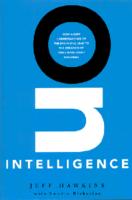
Book of the Week: "On Intelligence" by Jeff Hawkins

Keywords: cognitive science, Jeff Hawkins, artificial intelligence

"Jeff Hawkins, the high-tech success story behind PalmPilots and the Redwood Neuroscience Institute, does a lot of thinking about thinking. In On Intelligence Hawkins juxtaposes his two loves--computers and brains--to examine the real future of artificial intelligence. In doing so, he unites two fields of study that have been moving uneasily toward one another for at least two decades. Most people think that computers are getting smarter, and that maybe someday, they'll be as smart as we humans are. But Hawkins explains why the way we build computers today won't take us down that path. He shows, using nicely accessible examples, that our brains are memory-driven systems that use our five senses and our perception of time, space, and consciousness in a way that's totally unlike the relatively simple structures of even the most complex computer chip. Readers who gobbled up Ray Kurzweil's (The Age of Spiritual Machines and Steven Johnson's Mind Wide Open will find more intriguing food for thought here. Hawkins does a good job of outlining current brain research for a general audience, and his enthusiasm for brains is surprisingly contagious."
Source: Amazon.com

Reviews:
On Intelligence

Discuss:
Cognitive Science - tribe.net

Audio:
Jeff Hawkins - STVP Educators Corner

Blogs:
Brain Waves - Corante
CogNews
Cognitive Daily
Mind Hacks
Neurodudes
PsychNotes

Learn:
How Your Brain Works - Howstuffworks
Brain and Cognitive Sciences - MIT OCW

Sunday, August 08, 2004

Search Wars

Interview with Bill Gates
"At the Wall Street Journal's second annual D Conference in June, Bill Gates defended his company's plans to enter the search arena. In an interview conducted by Walt Mossberg and Kara Swisher, Mr. Gates explained why Microsoft will someday be a better alternative than Google."
Link
Source: AlwaysOn

Inside the Mind of Jeff Bezos
"It's hard to predict how Amazon will change in the next few years because Bezos is so committed to radical innovation. Bezos himself doesn't really know what will happen. 'We have this weirdness in our business,' he says. 'The raw ingredients that make our business -- things like CPU processing power, bandwidth, and disk space -- get twice as cheap every 12 to 18 months. Disk space is 30 times cheaper today than it was five years ago. Thirty times cheaper! So the real question becomes, What can you do with 30 times as much disk space, 20 times as much computing power, and 30 times as much bandwidth? All right, how are you going to make customers happy with that? It turns out that these are not easy questions to answer.' "
Link
Source: Fast Company

Marc Cuban vs. Google?
"What could be more fun than taking on Google in the search engine business ??

Im working with a company called IceRocket.com. IceRocket is a brand new search host that combines the best of spidered search, meta search, and what we hope are some unique and different features that make using the engine more efficient and addictive.
Im not involved in the day to day, Ive offered to help come up with some unique features that hopefully can allow them to seperate from the pack. To me, this is a unique way to 'design my own search engine.' The features that are and will be included, are the things I look for when Im doing my searches."
Link
Source: Marc Cuban

The Gillmor Gang - July 22, 2004
"Along with Mary Hodder, Dave Sifry will be providing real-time analysis of the political blogosphere for CNN at next week's Democratic National Convention. He looks forward to introducing the blogosphere to the 95% of the country who have never heard of it.

Dave discusses this announcement and gives us both social and technical insights into Technorati: 'tracking patterns of influence and authority in real time.' 140+ servers give Technorati a huge grid-computing system, and Dave explains how their technology is different from traditional search engines. On open-source software, 'We wouldn't exist without it.' He even goes deep into the Postgres/MySQL debate."
Link
Source: IT Conversations

See also:
Google Labs
Microsoft Research
Yahoo! Research Labs
Marc Cuban - Wikipedia
Searchblog
Search Engine Watch
WebmasterWorld
Web 2.0 Conference
Knowledge Measurement
Google's Next Steps or Google in 2010
The Global Mind
Network Computers

Wednesday, June 28, 2006

Audio/Video of the Day: TEDTalks

Keywords: TED (conference)

"Each year, TED hosts some of the world's most fascinating people: Trusted voices and convention-breaking mavericks, icons and geniuses. The talks they deliver have had such a great impact, we thought they deserved a wider audience. So now, for the first time, we're sharing them with the world at large... Each week, we'll release a new talk to inspire, intrigue and awaken the imagination."
Source: TEDTalks

Guests:
- Al Gore
- Sir Ken Robinson
- Majora Carter
- David Pogue
- Tony Robbins
- Hans Rosling

Blogs:
Introducing TEDTalks - TED Blog
Al Gore and Hans Rosling speech online on TEDTalks, a must-see - Loic Le Meur Blog
TEDtalks: The other Al Gore speech, and what Tony Robbins really told him - Lunch over IP
A Mind-Blowing Conference, Now on Video - Pogue's Posts - Technology - New York Times Blog

Communication:
If your idea is worth spreading, then presentation matters - Presentation Zen

Friday, May 05, 2006

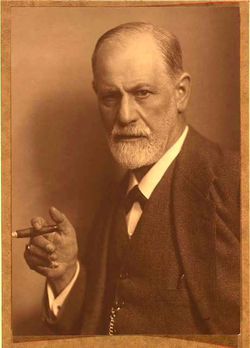
Person of the Day: Sigmund Freud

Keywords: psychology

"Sigmund Freud (May 6, 1856–September 23, 1939) was an Austrian neurologist and the founder of the psychoanalytic school of psychology. The theories distinctive of this school generally included hypotheses that (1) human development is best understood in terms of changing objects of sexual desire, (2) the psychic apparatus habitually represses wishes, usually of a sexual or aggressive nature, whereby they become preserved in one or more unconscious systems of ideas, (3) unconscious conflicts over repressed wishes have a tendency to manifest themselves in dreams, parapraxes ('Freudian slips'), and symptoms, (4) unconscious conflicts are the source of neuroses, and (5) neuroses can be treated through bringing the unconscious wishes and repressed memories to consciousness in psychoanalytic treatment."
Source: Wikipedia

Learn:
Sigmund Freud - MIT OCW
Brain and Cognitive Sciences - MIT OCW
Sigmund Freud - About.com
How Dreams Work - Howstuffworks

Discuss:
Sigmund Freud - MySpace
Cognitive Science - tribe.net
Social and Personality Psychology - MySpace

Blogs:
Brain Waves
CogNews
Cognitive Daily
Mind Hacks
Eide Neurolearning Blog
Neurofuture
neurodudes
Play Journal

See also:
Person of the Day - The World 2 Come

Monday, May 01, 2006

Audio of the Day: The Long Now Foundation Seminars

Keywords: Long Now Foundation

The Long Now Foundation Seminars
Link

Topics:
- Vision: Wikipedia and the Future of Free Culture
- The Next 100 Years of Science: Long-term Trends in the Scientific Method
- Perfect Order: A Thousand Years in Bali
- Nuclear Power, Climate Change and the Next 10,000 Years
- The View from the End of the World
- Making Digital Durable: What Time Does to Categories
- The Difficulty of Looking Far Ahead
- Kurzweil's Law
- Patient Revolution: Human Rights Past and Future
- How Societies Fail-And Sometimes Succeed
- The 2ist Century Medieval City
- Time Capsule Behavior
- Cities & Time
- Very Long-term Very Large-scale Biomimicry
- The Political History of North America from 25,000 BC to 12,000 AD
- Religious War In Light of the Infinite Game
- The Consequences of Human Life Extension
- The Prospects of Human Life Extension
- The Long Green
- Progress on the 10,000-year Clock
- The Depopulation Problem
- The Search for Extra-terrestrial Intelligence: Necessarily a Long-term Strategy
- The Singularity: Your Future as a Black Hole
- Mapping Time
- Third World Conservation: It's ALL Gardening
- The Asteroid Threat Over the Next 100,000 Years
- Long-term Policy Analysis
- There's Plenty of Room at the Top: Long-term Thinking About Large-scale Computing
- The Art Of The Really Long View
- The Long Now

Guests:
George Dyson, Peter Schwartz, Brian Eno, Bruce Sterling, Danny Hillis, Stewart Brand, Jared Diamond, Ray Kurzweil, Freeman Dyson, Esther Dyson, Clay Shirky, Kevin Kelly, Jimmy Wales

The Long Now
"The Long Now Foundation was established in 01996* to develop the Clock and Library projects, as well as to become the seed of a very long term cultural institution. The Long Now Foundation hopes to provide counterpoint to today's 'faster/cheaper' mind set and promote 'slower/better' thinking. We hope to creatively foster responsibility in the framework of the next 10,000 years."
Link

Video:
The Long Now Foundation - Google Video

Monday, March 06, 2006

Book of the Week: Stanislaw Lem

Image: Lem.pl

Keywords: science fiction

"Stanislaw Lem (born September 12, 1921, Lviv) is a Polish science fiction, philosophical, and satirical writer. His books have been translated into 40 languages and sold over 27 million copies. At one point he was the most widely read science fiction author in the world. Lem's writing is full of intelligent humor, puns, and neologisms, and Michael Kandel's translations into English have been praised by many for capturing Lem's style."

"One of Lem's primary themes was the impossibility of communication between humans and profoundly alien civilizations. He also wrote about human technological progress and the problem of human existence in a world where technology development makes biological human impulses obsolete or dangerous. In many novels, humans become an irrational and emotional liability to their machine partners, who are not perfect either. His alien societies are often incomprehensible to the human mind including swarms of mechanical flies (in The Invincible) and a large Plasma Ocean (in Solaris). Issues of technological utopias appeared in Peace on Earth, in Observation on the Spot, and, to a lesser extent, in The Cyberiad. He also sometimes deploys a wicked sense of humor in his descriptions of even the darkest human situations--most famously in The Futurological Congress and Memoirs Found in a Bathtub. In this regard, he has sometimes been compared to Kurt Vonnegut."
Source: Wikipedia

Discuss:
Solaris Forum

See also:
Book of the Week - The World 2 Come

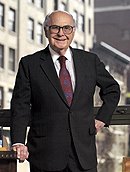
Meditation of the Day: Reflections on Reaching 85... Are We Getting it Right?

Harold Burson:
"It's often said age is in the mind. Growing up in the 1920s and 30s, I couldn't even imagine I would be around for my 85th birthday. In those days, most people settled for the Biblical three-score-and-ten. Still blessed with most of my faculties, I reflect, from time to time, on what, for me, has been a life that, in earlier years, I would never have thought possible. However, I would be less than candid communicating the impression I now consider my self 'old.' Like many others, my perspective on young, middle and old age has changed with the passing years. Approaching 40, I thought middle age started sometime after 50. Nearing 65, I figured old age started at 75. Now that I am 85 (hopefully still counting!) I stubbornly believe old age is far in the distance."

"But I must confess to some misgivings on whether we as a society have advanced in our sense of right and wrong -- in short, the values we live by. I am troubled that we seem not to have many heroes nowadays, whether in government, in sports, in entertainment, in business. Who are the equals of Franklin Roosevelt, Winston Churchill or Charles DeGaulle? Of Joe DiMaggio, Ted Williams or Lou Gehrig? Who is today's Einstein?"
Source: Harold Burson

Wednesday, December 14, 2005

Friday, October 14, 2005

Veselin Topalov is World Chess Champion!

Keywords: chess, Veselin Topalov, World Chess Championship

"The Bulgarian Veselin Topalov (30) became World Champion on chess. The citizen of the city of Rousse ended even against Rustam Kasimdzhanov (Uzbekistan) and dethroned him at the world top.
The Bulgarian Topalov has started the play against the ex world champion very easy but suddenly made some brilliant moves that let him attack. Kasimdzhanov evaded the defeat at the 42nd move and the two players agreed to end even but that has brought the title for Topalov."
Source: Focus News

Blogs:
Topalov FIDE Champion! - The Daily Dirt Chess Blog

Photos:
Veselin Topalov is World Champion - ChessBase.com

Opinion:
"The World Chess Championship, San Luis, Argentina: what an event! The daily hecatombs of pieces and pawns have produced the most thrilling chess spectacle of recent decades. It is a pity there are so few visitors to the hall to witness the bloodbath. Never mind: the servers that carry the moves live around the globe are breaking all audience records.

One man, Bulgaria's Veselin Topalov, has given an exhibition of such virtuosity that it looks doubtful, at the halfway stage, that he can be stopped. The comparisons are not with Garry Kasparov - merely the greatest chess player ever - but with Bobby Fischer, the only modern giant capable of such thorough annihilation."
Source: Guardian

Sunday, May 08, 2005

Who Started the Second World War?


Who Started the Second World War?
Originally uploaded by divedi.
Keywords: World War II, Viktor Suvorov, Soviet Union, Stalin, communism, Hitler

"It sometimes happens that the most significant historical works are virtually ignored by the mainstream press, and consequently reach few readers. Such is the case with many revisionist studies, including this important work by a former Soviet military intelligence officer who defected to the West in 1978. Even before the appearance of this book, he had already established a solid reputation with the publication of five books, written under the pen name of Viktor Suvorov, on the inner workings of the Soviet military, and particularly its intelligence operations.

In Icebreaker Suvorov takes a close look at the origins and development of World War II in Europe, and in particular the background to Hitler's 'Operation Barbarossa' attack against the Soviet Union on June 22, 1941. Since its original publication in Russian (entitled Ledokol) in France in 1988, it has been published in an astonishing 87 editions in 18 languages. In spite of its importance to the historical record, Icebreaker has received very little attention in the United States. The few reviews that have appeared here have been almost entirely brief and dismissive -- a shameful treatment that reflects the cowardice and intellectual irresponsibility of a 'politically correct' scholarly establishment.

According to the conventional view, Hitler's perfidious attack abruptly forced a neutral and aloof Soviet Russia into war. This view further holds that a surprised Stalin had naively trusted the deceitful German Fьhrer. Rejecting this view as political propaganda, Suvorov shows Stalin's personal responsibility for the war's outbreak and progression. Above all, this book details the vast Soviet preparations for an invasion of Europe in the summer of 1941 with the goal of Sovietizing central and western Europe. Suvorov is not alone in his view. It is also affirmed by a number of non-Russian historians, such as American scholar R. H. S. Stolfi in his 1991 study Hitler's Panzers East: World War II Reinterpreted (reviewed by me in the Nov.-Dec. 1995 Journal).

In spite of rigid Soviet censorship, Suvorov has succeeded in digging up many nuggets of valuable information from publicly available Soviet writings that confirm his central thesis. Icebreaker is based on the author's meticulous scouring of such published sources as memoirs of wartime Soviet military leaders, and histories of individual Soviet divisions, corps, armies, fleets, and air units."
Link
Source: Journal of Historical Review

The book of the century
Alexander Chaihorsky reviews Viktor Suvorov's ideas:
"I think Suvorov's book(s) on the history of WW2 should be called the 'Book of the 20th Century' and he himself should be awarded a Nobel Price. Singlehandedly, this man wiped off the camouflage image that was painted over the real picture of how and who started the WW2 and he did that by pioneering a new approach in history studies - studying the obvious.
But the WW2 winners club is not very happy with his findings so it was almost impossible to find his books in English, since the whole Hamish Hamilton edition was quickly destroyed (but tens of millions sold in Russian, German, Polish, French).
I bought my copy several years ago from the estate sale of the late US Marines 4 star general. I paid twenty bucks.
However during past several years the interest for this book literally soared and today this is one of the most sought after books about WW2 history. Today you have to shell out several hundred bucks to enjoy your copy of 'Icebreaker' in English.
In my opinion the mere fact that a book on WW2 history achieved such a price frenzy is amazing. Several books were written to smear the author's reputation and discredit his findings (like Gorodetsky's book) - you can buy them for few bucks and make up your own mind. I wish Suvorov's brilliant rebuttal of Gorodetsky's book will be translated into English some day.
If you have not read yet this book I envy you - you are about to read the most interesting, the most brilliantly researched and the most sensational book on the most important event of 20th century and how it was camouflaged into something completely different for after-war public consumption. After this book your level of trust for the 'free press', government propaganda and official history will be shattered.
And its a good thing, if you ask me."
Link
Source: Amazon.com

Blogs:
Icebreaker (Excerpts) by Victor Suvorov - nobs

See also:
Victor Suvorov - Journal for Historical Review

Photos:
World War 2 Pictures In Color

Sunday, April 03, 2005

Time not only for a new Pope, but for a strong 21st century leader

Keywords: Pope John Paul II, pope, Roman Catholic Church

The pope has died.

News:
Pope John Paul II - Google News
Pope John Paul II - Yahoo News
Pope John Paul II - Topix.net

Blogs:
The Pope Blog
Pope Watch
Catholic Insider
Catholic Church - Religion News Blog
Pope John Paul II - Technorati

Rodrigo A. Sepъlveda Schulz writes:

"Rather discouraging state of the world, don't you think ? I was watching the news tonight, following the last moments of John-Paul II. It seemed to me I could have been watching the last episode of American Pop Idol, or Survivor, or whatever Reality show on TV. Don't get me wrong, I am not talking unrespectfully about the last moments of an old man. But I find it to be really sad times that we should have to watch live on TV the last breaths of a man, as mighty he could be.

In Europe, we are also awaiting news about the death of Rainier Grimaldi, ruler of Monaco. His son Albert has assumed the regency of the country yesterday while we wait for his father to pass away. Rather indecent to listen to updates every 15' on the radio.

Odd that is should affect the rulers of two micro-states of less than 2 kmІ on the European continent: Monaco and Vatican City. Another examples of our historical heritage, as these countries don't make much sense today.

I have great concerns with churches in general (again, not with religion, nor with moderately religious people, but with the church apparatus), and the Catholic Church in particular. I believe that the Catholic Church should really modernize itself and reflect the modern world in its modus operandi. Therefore it should recognize
- that AIDS is a major catastrophe for the African continent and promote condoms aggressively
- that it is antiquated to forbid priests to marry or have sex (couldn't we decrease all these cases of paedophilia by priests ?)
- that it is obnoxious to display such wealth in churches while catholic folks live in absolute poverty in parts of Latin America (I still can't believe the religious fervour on display on that continent).
- apologize again for the atrocities of its history: the Inquisition, the slaughtering of Indian Americans, the Crusades, the Renaissance religious wars, etc. Clear and final apology of wrong-doing.
- recognize that 87% of Catholics live in the Southern hemisphere, not in Italy (hey Karol was the first non Italian Pope in over 450 years)
- that the upper ranks of the Catholic church be open to WOMEN (hey boys, girls are more than 50% of the world population!)

You might say that I have no right to have an opinion on the inner workings of something I don't share (faith in a Catholic god), and that I have no thorough understanding of (the Catholic Church institution and theology). Well it's like saying that by not knowing how to cook, one is unable to appreciate a meal at a good restaurant. I have been reading about the Church for many years, and I still don't understand their positions on the above mentionned issues.

I mind about the Catholic Church because more than a ONE billion people claim they are Catholics. Hence that more than 1/6 of the world population will also follow the recommendations of the Pope.

In the next few days, 117 cardinal electors will go to Rome and perform an old ritual (although modernized by JP2) to select a new leader. The Vatican is not a democracy, as Catholics don't vote. Cardinals are appointed by the Pope, himself appointed by cardinals. Reminds me of the Old Regime in France under the Bourbons... It's not a transparent process as papal electors are sworn to absolute secrecy, unless a cardinal wishes to get automatically excommunicated (a temporal sanction for temporal men...).

I would really like the following in the nexts few weeks:

- that candidates for the Papal throne would publish their political, spiritual and social programme for their reign (I believe I won't see this in my lifetime...)
- that the next Pope will come from the Southern Hemisphere: Asian, Latin American or African.
- that the next Pope will be an energetic man (hey no women are made Cardinals these days...) below 70 years old (would you elect your next president to be over 70? not on his first term right ?)
- that the next Pope will change the Vatican system, so that Popes are obliged to step down once they reach 80 years old, and that he introduces more democratic principles to govern the Church.

I looked at the list of cardinals and electors (from www.catholic-pages.com): not many are under 70. Even less are from countries other than Europe + USA. Only ONE is below 60 years old.

Lуpez Trujillo, Alfonso (Colombia) - Aged 69
Lуpez Rodriguez, Nicolбs de Jesъs (Dominican Republic) - Aged 68
Pengo, Polycarp (Tanzania) - Aged 60
Rivera Carrera, Norberto (Mexico) - Aged 62
Dias, Ivan (India) - Aged 68
Terrazas Sandoval, Julio (Bolivia) - Aged 69
Napier, Wilfrid Fox (South Africa) - Aged 64
Rodrнguez Maradiaga, Oscar Andrйs (Honduras) - Aged 62
Cipriani Thorne, Juan Luis (Peru) - Aged 61
Bergoglio, Jorge Mario (Argentina) - Aged 68
Okogie, Anthony Olubumni (Nigeria) - Aged 68
Zubeir Wako, Gabriel (Sudan) - Aged 64
Toppo, Telesphore Placidus (India) - Aged 65
Pell, George (Australia) - Aged 63

Turkson, Peter Kodwo Appiah (Ghana) - Aged 56

I can't choose a good candidate from this crowd. I can't read their program like in a normal election. Good luck gentlemen; be wise in your choice. Only history will be your judge. I look forward to the 'Papam Habemus' and the next 'Urbi et Orbi'.

PS: A good movie of the papal election (+ some real bad propaganda during the Cold War) was shot by Anthony Quinn: The Shoes of the Fisherman (1968)"
Link
Source: Rodrigo A. Sepъlveda Schulz

Opinion:
The Reformation - Buzz Machine

Special Report:
An influential pontiff dies - CNN

Images:
Pope - Flickr

Discuss:
One of the true heroes of the twentieth century - kuro5hin.org

John Paul II, a popular pope, not a great one - kuro5hin.org

Learn:
How the Papacy Works - HowStuffWorks

Auduo:
Religious War In Light of the Infinite Game - The Long Now Foundation

Thursday, March 31, 2005

Sinking Globalization

Keywords: globalization, World War I, 20th century

Niall Ferguson, Professor of History at Harvard University, asks:

"Could globalization collapse? It may seem unlikely today. Yet despite many warnings, people were shocked the last time globalization crumbled, with the onslaught of World War I. Like today, that period was marked by imperial overstretch, great-power rivalry, unstable alliances, rogue regimes, and terrorist organizations. And the world is no better prepared for calamity now."

"Ninety years ago this May, the German submarine U-20 sank the Cunard liner Lusitania off the southern coast of Ireland. Nearly 1,200 people, including 128 Americans, lost their lives. Usually remembered for the damage it did to the image of imperial Germany in the United States, the sinking of the Lusitania also symbolized the end of the first age of globalization.

From around 1870 until World War I, the world economy thrived in ways that look familiar today. The mobility of commodities, capital, and labor reached record levels; the sea-lanes and telegraphs across the Atlantic had never been busier, as capital and migrants traveled west and raw materials and manufactures traveled east. In relation to output, exports of both merchandise and capital reached volumes not seen again until the 1980s. Total emigration from Europe between 1880 and 1910 was in excess of 25 million. People spoke euphorically of 'the annihilation of distance.'

Then, between 1914 and 1918, a horrendous war stopped all of this, sinking globalization. Nearly 13 million tons of shipping were sent to the bottom of the ocean by German submarine attacks. International trade, investment, and migration all collapsed. Moreover, the attempt to resuscitate the world economy after the war's end failed. The global economy effectively disintegrated with the onset of the Great Depression and, after that, with an even bigger world war, in which astonishingly high proportions of production went toward perpetrating destruction.

It may seem excessively pessimistic to worry that this scenario could somehow repeat itself--that our age of globalization could collapse just as our grandparents' did. But it is worth bearing in mind that, despite numerous warnings issued in the early twentieth century about the catastrophic consequences of a war among the European great powers, many people--not least investors, a generally well-informed class--were taken completely by surprise by the outbreak of World War I. The possibility is as real today as it was in 1915 that globalization, like the Lusitania, could be sunk.

BACK TO THE FUTURE

The last age of globalization resembled the current one in numerous ways. It was characterized by relatively free trade, limited restrictions on migration, and hardly any regulation of capital flows. Inflation was low. A wave of technological innovation was revolutionizing the communications and energy sectors; the world first discovered the joys of the telephone, the radio, the internal combustion engine, and paved roads. The U.S. economy was the biggest in the world, and the development of its massive internal market had become the principal source of business innovation. China was opening up, raising all kinds of expectations in the West, and Russia was growing rapidly.

World War I wrecked all of this. Global markets were disrupted and disconnected, first by economic warfare, then by postwar protectionism. Prices went haywire: a number of major economies (Germany's among them) suffered from both hyperinflation and steep deflation in the space of a decade. The technological advances of the 1900s petered out: innovation hit a plateau, and stagnating consumption discouraged the development of even existing technologies such as ..."

Link
Source: Foreign Affairs

Discuss:
AlwaysOn
Existential Risks - tribe.net

See also:
The Coming Energy Crisis or Peak Oil
The Global War of the 21st Century
Existential Risks

Blogs:
Globalization - Technorati
That 1914 Feel - Clusterfuck Nation by Jim Kunstler

Opinion:
Globalist

Sunday, March 27, 2005

IBM computing algorithm thinks like an animal

Keywords: IBM, artificial intelligence, algorithm, thinking, vertebrate

"A mathematical model that mimics the behavior of the brain's neocortal minicolumns could one day lead to robots that can 'see' like humans and/or make appropriate decisions when bombarded with sensory information.

The mathematical model created at IBM simulates the behavior of 500,000 minicolumns connected by 400 million connections. With it, 'we were able to demonstrate self-organization' and behavior similar to that seen in the real world, according to Charles Peck of IBM's Biometaphorical Computing team."

Link
Source: KurzweilAI.net

Discuss:
Cognitive Science - tribe.net

See also:
Confabulation: New Theory of Cognition
BlueGene/L doubles up - CTWatch Blog

News:
Artificial intelligence - Google News
Artificial intelligence - Yahoo News
Artificial intelligence - Topix.net

Blogs:
Robotic Nation Evidence
Artificial intelligence - Technorati

Ideas:
How to Program the Global Mind - Minding the Planet
CHI, a Collaborative Human Interpreter - Google Blogoscoped

Scenarios:
Robotic Nation - Marshall Brain

Thinkers:
Singularity Institute for Artificial Intelligence
Ben Goertzel
Stormrider

Audio:
John Smart - Simulation, Agents and Accelerating Change - IT Conversations

Learn:
How Your Brain Works - HowStuffWorks
Brain and Cognitive Sciences - MIT OpenCourseWare
Electrical Engineering and Computer Science - MIT OpenCourseWare

Sunday, March 13, 2005

Confabulation: New Theory of Cognition

Keywords: cognitive science, artificial intelligence, cognition, mind, brain, consciousness

"A leading expert in artificial intelligence and neural networks argues that cognition in humans and many animals occurs in a very different, non-algorithmic and less complex way than has been widely assumed until now."

"The Hecht-Nielsen theory posits that all aspects of cognition – seeing, hearing, understanding, planning and so on – are carried out using a single type of knowledge (antecedent support) and a single information processing operation called ‘confabulation’ which is carried out between the brain’s cerebral cortex and thalamus. The scientist’s theory hypothesizes that confabulation is the only information processing operation used in cognition. The theory also explains the cognitive mechanism by which behaviors (thoughts and movements) are launched, moment by moment, throughout the day."

Link
Source: PhysOrg
[via Nova Spivack]

See also:
The Global Consciousness Project
The Pentagon's Robotic Army
Brain Waves - Corante

Discuss:
Cognitive Science - tribe.net

Audio:
Dr. Peter Whybrow - IT Conversations

Learn:
How Your Brain Works - HowStuffWorks
Brain and Cognitive Sciences - MIT OpenCourseWare

Thursday, March 10, 2005

The 2005 Fast 50

Keywords: business, award, innovation

"Fast is a state of mind.

If you're fast, you don't accept the status quo. You plan for your moment to shine and when it comes -- pow! -- run for daylight and don't look back. Being fast is taking on an impossible task and bit by bit making it work. It's imagining a better world (or even one that smells like chocolate). Here are the winners of Fast Company's fourth annual global readers' challenge -- every one of them an innovator, dreamer, and doer. Just what did you accomplish in 2004?"

Link
Source: Fast Company

See also:
Global Business Influentials - CNN
The 2005 Wired Rave Awards

Thursday, March 03, 2005

The Global Consciousness Project

Keywords: consciousness, noosphere, mind, brain, quantum mechanics, mathematics

"The Global Consciousness Project, also called the EGG Project, is an international and multidisciplinary collaboration of scientists, engineers, artists and others. This website introduces methods and technology and empirical results in one section, and presents interpretations and applications in another.

We have been collecting data from a global network of random event generators since August, 1998. The network has grown to about 65 host sites around the world running custom software that reads the output of physical random number generators and records a 200-bit trial sum once every second, continuously over months and years. The data are transmitted over the internet to a server in Princeton, NJ, USA, where they are archived for later analysis.

The purpose of this project is to examine subtle correlations that appear to to reflect the presence and activity of consciousness in the world."

Link
Source: Princeton University
[via Red Nova]

See also:
Can This Black Box See Into the Future? - Red Nova
Brain Waves

Audio:
Brian Greene - IT Conversations

Learn:
How Your Brain Works - HowStuffWorks
Brain and Cognitive Sciences - MIT OpenCourseWare
Mathematics - MIT OpenCourseWare
Physics - MIT OpenCourseWare

Saturday, February 12, 2005

Humanity: The Next Revolution

Keywords: future, science

The Guardian asked some bright thinkers: "So what's next? What will be the [next] revolution?"

The answers:
'We will invent our successors'
Seth Shostak, senior astronomer, Seti Institute, California

'We will understand the human mind'
John Sulston, founder of the Sanger Institute, Cambridge

'The existence of parallel universes'
Michio Kaku, theoretical physicist, the City University of New York

'We will change our genetic makeup'
Norbert Gleicher, director of the Centre for Human Reproduction, Chicago

'We will find out if we are alone'

Colin Pillinger, head of planetary and space sciences, Open University

'Humans become a collective intelligence'
John Barrow, professor of mathematical sciences and author of The Infinite Book, Cambridge University

'We'll understand thoughts and feelings'
Steven Pinker, professor of psychology, Harvard University

'The end of the individual'
Susan Greenfield, neuroscientist, Oxford University

'What if God lives in a part of our brain?'
Nancy Rothwell, neuroscientist at Manchester University

'What it means to be a person'
V S Ramachandran, director of the Center for Brain and Cognition at the University of California at San Diego

'Conscious machines'
Igor Aleksander, professor of neural systems engineering at Imperial College London

'Higher dimensions'

Lisa Randall, theoretical physicist, Harvard University

'Humans are less miraculous than we thought'
Stephen Wolfram, creator of Mathematica and author of A New Kind of Science

Link
Source: Guardian
[via Sentient Developments]

See also:
The 2005 Edge Annual Question
Neal Stephenson’s Past, Present, and Future - Reason

Audio:
Pop!Tech 2004 - IT Conversations
Accelerating Change 2004 - IT Conversations